"Thanks to the virgin": ex-votos on the internet and digital religion in baroque modernity
DOI:
https://doi.org/10.29340/en.v9n18.454Keywords:
Ex-votos, internet, digital religion, baroque modernity, lived religionAbstract
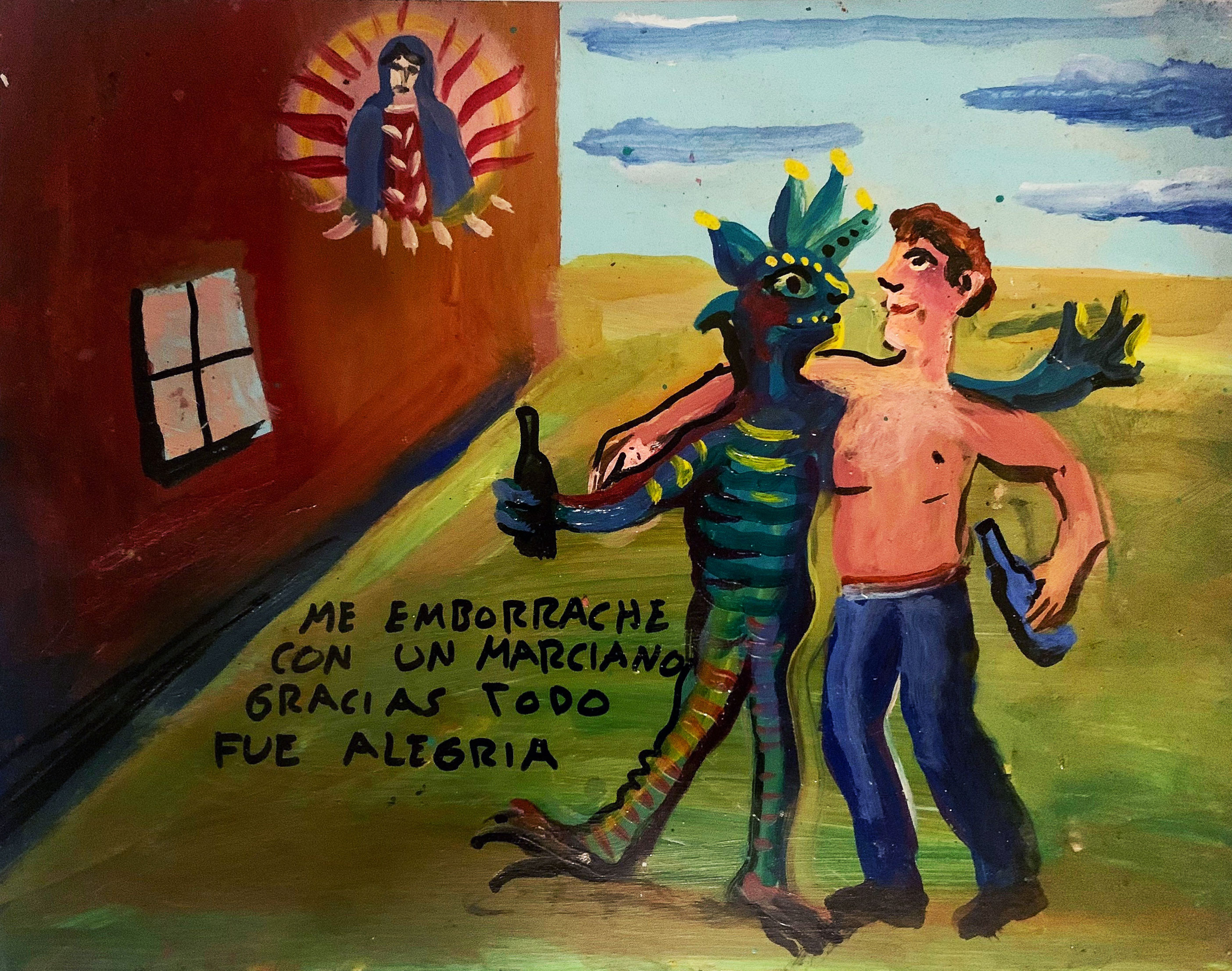
This article analyzes ex-votos within online user interactions as a form of digital religion, in which the sacred is transferred and adapted to virtual spaces. By focusing on virtual retablos as forms of entertainment, self-representation, mockery, and social critique, it shows how they function as modes of communication, as both individual and collective documents, and as popular and potentially transgressive expressions. This transgression extends beyond the participation of ordinary users, pointing to a devotional shift toward the secular resignification of religious imagery. The analysis draws on the concept of baroque modernity, emphasizing the adaptive and subversive reinvention of cultural symbols, and on the notion of lived religion to understand how the religious and the everyday are interwoven in digital contexts.
Downloads
References
Abad González, Luisa (2016). “Narraciones sobre la enfermedad en ermitas y santuarios de devoción: un modelo de storytelling en la proyección sociocomunitaria del sufrimiento”, Revista San Gregorio,
núm. 13, pp. 30-39.
Adriana ilustrada [@adrianab_n] (2023, julio 6). “Hoy hice este falso exvoto donde me tomé muchas licencias para narrar otros sucesos de la vida de Frida Kahlo para conmemorar el 116 aniversario de su nacimiento “#frida #fridakahlo #casaazul #casaazulfridakahlo #coyoacán #coyoacán #méxico #méxico #exvoto #exvotos” [actualización de estado de Twitter]. https://x.com/adrianab_n/status/1676770014496452608
Ammerman, Nancy T. (2013, junio). “Spiritual but Not Religious? Beyond Binary Choices in the Study of Religion”, Journal for the Scientific Study of Religion, vol. 52, núm. 2, pp. 258-278. https://doi.org/10.1111/jssr.12024
— (2014). “Finding Religion in Everyday Life”, Sociology of Religion, vol. 75, núm. 2, pp. 189-207.
Ávila, Mary Carmen (2021, enero 4). “¡Christopher Landau presume sus ‘milagritos’ pintados por mexicanos!”, El Sol de México. https://www.elsoldemexico.com.mx/doble-via/fotos-christopher-landau-embajador-eu-retablos-milagritos-exvotos-pintados-mexicanos-6204246.html
Berger, Peter (2015). “The Hospital: On the Interface between Secularity and Religion”, Society, vol. 52, núm. 5, pp. 410-412.
Blackmore, Susan et al. (2000). “The Power of Memes”, Scientific American, vol. 283, núm. 4, pp. 64-73.
Brasher, Brenda (2001). Give me that Online Religion. San Francisco: Jossey-Bass Publishers.
Campbell, Heidi (2005). “Spiritualising the Internet: Uncovering Discourse and Narrative of Religious Internet Usage”, Online-Heidelberg Journal of Religions on the Internet, vol. 1, núm. 1. http://archiv.ub.uniheidelberg.de/volltextserver/volltexte/2005/5824/pdf/Campbell4a.pdf
— y Wendi Bellar (2023). Digital Religion: The Basics. Londres: Routledge.
Castells, Manuel (2000). “Toward a Sociology of the Network Society”, Contemporary Sociology, vol. 29, núm. 5, pp. 693-699.
— (2001). The Internet Galaxy: Reflections on the Internet, Business and Society. Oxford: Oxford University Press.
Christopher Landau [@ChrisLandauUSA] (2021, diciembre 12). “Hoy me uno al agradecimiento en , y todo el a Nuestra Señora de Guadalupe. Necesitamos su intervención más que nunca. Un fuerte abrazo a todos los guadalupanos donde sea que estén ”. [actualización de estado de Twitter]. https://x.com/ChrisLandauUSA/status/1470104018647195655
Collins, Peter (2016). “Acute Ambiguity: Towards a Heterotopology of Hospital Chaplaincy”, en Abby Day, Giselle Vincett y Christopher R. Cotter (eds.). Social Identities between the Sacred and the Secular. Londres: Routledge, pp. 39-58.
Dawson, Lorne y Douglas Cowan (2004). Religion Online: Finding Faith on the Internet. Londres: Routledge.
De la Torre, Renée (2021). “La Virgen de los mil y un rostros: del mimetismo colonizador al ultrabarroco guadalupano”, en Emerson Giumbelli y Fernanda Arêas Peixoto (eds.). Arte e religião: passagens, cruzamentos, embate. Brasilia: ABA Publicações, pp. 19-54.
— (2023). “Saints and their Replicants: A Decolonization of Power through Ultra-baroque Devotion”, en Gurminder K. Bhambra et al. (eds.). The SAGE Handbook of Global Social Theory. Londres: Sage,
pp. 315-333.
— Nahayeilli Juárez Huet, Carlos Nazario Mora Duro y María del Rosario Ramírez Morales (2020). “Sin religión”, en Renée de la Torre, Cristina Gutiérrez Zúñiga y Alberto Hernández (eds.). Reconfiguración de las identidades religiosas en México, t. II. Diversidad religiosa. Ciudad de México: El Colegio de la Frontera Norte/CIESAS, pp. 127-154.
Del Castillo, Alberto (2005). “Familia y sociedad: imágenes y representaciones en el mundo de los exvotos en México en las primeras décadas del siglo XX”, Anais do Museu Paulista: História e Cultura Material, vol. 13, núm. 1, pp. 175-203. https://doi.org/10.1590/S0101-47142005000100006
Dilley, Gerald (2021, mayo 3). “Centuries-Old Religious Folk Art Finds New Subjects in Covid-19 Pandemic”, Mexico News Daily. https://mexiconewsdaily.com/mexico-living/centuries-old-religious-folk-art-finds-new-subjects-in-covid-19-pandemic/
Durand, Jorge y Douglas S. Massey (1995). Miracles on the Border: Retablos of Mexican Migrants to the United States. Tucson: University of Arizona Press. https://doi.org/10.2307/j.ctvz0hb6g
Durkheim, Émile (1912 [2013]). Las formas elementales de la vida religiosa: el sistema totémico en Australia (y otros escritos sobre religión y conocimiento). México: Fondo de Cultura Económica.
Dussel, Enrique (1986, agosto). “Popular Religion as Oppression and Liberation: Hypotheses on its Past and Present in Latin America”, Concilium, vol. 186, pp. 82-94.
Echeverría, Bolívar (2007, octubre). “El guadalupanismo y el ethos barroco (Meditaciones sobre el barroquismo II)”. Ponencia presentada en Moving Worlds of the Baroque. Toronto: University of Toronto. http://bolivare.unam.mx/ensayos/el_guadalupanismo_y_el_ethos_barroco
— (2019). Modernity and “Whiteness”. Trad. Rodrigo Ferreira. Cambridge: Polity Press.
Facebook-ERM (2019). “Exvotos, retablos y milagritos” [página web]. https://www.facebook.com/Exvotos-retablos-y-milagritos-1489 14932314654/
— (2023, agosto 1). “Me emborraché con un marciano, gracias, todo fue alegría” [publicación en Facebook]. https://www.facebook.com/photo?fbid=557281266436874&set=a.459383322893336
Fraser Giffords, Gloria (1974). Mexican Folk Retablos. Albuquerque: University of New Mexico Press.
Garnett, Jane y Gervase Rosser (2019). “The Ex Voto between Domestic and Public Space”, en Maya Corry, Marco Faini y Alessia Meneghin (eds.). Domestic Devotions in Early Modern Italy. Leiden: Brill, pp. 45-62.
Gómez Arzapalo, Ramiro y Alicia María Juárez Becerril (2018). Hierofanías de lo cotidiano: irrupciones de lo sagrado en la ordinariedad. Análisis de exvotos. Ciudad de México: Senda Libre.
González, Jorge A. (1986). “Exvotos y retablitos. Religión popular y comunicación social en México”, Estudios sobre las Culturas Contemporáneas, vol. 1, núm. 1, pp. 7-51. https://www.redalyc.org/articulo.oa?id=31610102
Hamman, Amy (2006). Faith and Politics: The Socio-Political Discourses engaged by Mexican Ex-Voto Paintings from the Nineteenth-Century and Beyond. Denton: University of North Texas.
Helland, Christopher (2000). “Online-Religion/Religion-Online and Virtual Communities”, en Jeffry Hadden y Douglas Cowan (eds.). Religion on the Internet: Research Prospects and Promises. Londres: JAI Press, pp. 205-223.
— (2005). “Online Religion as Lived Religion: Methodological Issues in the Study of Religious Participation on the Internet”. Online-Heidelberg Journal of Religions on the Internet, vol. 1, núm. 1, pp. 1-16.
— (2016). “Digital Religion”, en David Yamane (ed.). Handbook of Religion and Society. Londres: Springer, pp. 177-196.
Hernández Vargas, Paulina (2024, junio). “Del taller a la Academia a la nada. La arista artística de la secularización decimonónica en la Ciudad de México”. Ponencia presentada en el XXV Encuentro Red de Investigadores del Fenómeno Religioso en México (RIFREM). Guadalajara: Universidad de Guadalajara.
Hoover, Stewart y Jin Kyu Park (2007). “Religión y sentido en la era digital: internet y religión. Investigación de campo”, en Peter G. Horsfield (ed.). Medios y creencias. Perspectivas culturales del cristianismo en el entorno mediático. Distrito Federal: Universidad Iberoamericana/Plaza y Valdés Editores, pp. 179-199.
Jiménez, Christian (2020, noviembre 26). “Las católicas también abortan: presentan exposición pictórica de exvotos y testimonios”, El Universal Oaxaca. https://web.archive.org/web/20201126220024/https://oaxaca.eluniversal.com.mx/sociedad/26-11-2020/las-catolicas-tambien-abortan-presentan-exposicion-pictorica-de-exvotos-y
Juárez Becerril, Alicia María (2024). “Exvotos de trasgresión social a partir de un enfoque desde la religiosidad popular”, Diálogos de Campo, vol. 7, núm. 13, p. 29.
Knibbe, Kim y Helena Kupari (2020). “Theorizing Lived Religion: Introduction”, Journal of Contemporary Religion, vol. 35, núm. 2, pp. 157-176.
Kuru, Ahmet T. (2009). Secularism and State Policies toward Religion: The United States, France, and Turkey. Cambridge: Cambridge University Press.
Luckmann, Thomas (1967). The Invisible Religion: The Problem of Religion in Modern Society. Londres: Taylor & Francis.
Miller, Daniel (2021). “The Anthropology of Social Media”, en Heather Horst y Daniel Miller (eds.). Digital Anthropology. Londres: Routledge, pp. 85-100.
Mora Duro, Carlos Nazario (2019). “Milagritos virtuales y e-rejía: apropiación de exvotos en el contexto de internet”, PAAKAT: Revista de Tecnología y Sociedad, vol. 9, núm. 17, p. 13.
— (2025). “Believing and Doubting in Science and Religion”, Austral Comunicación, vol. 14, núm. 2, p. 26.
— y Arturo Fitz Herbert (2024). “Atheist Thanks to God: Exploring the Secular Paradox among Latin American ‘Nones’”, Secular Studies, vol. 6, núm. 2, pp. 164-191.
Morello, Gustavo, Catalina Romero, Hugo Rabbia y Néstor da Costa (2017). “An Enchanted Modernity: Making Sense of Latin America’s Religious Landscape”, Critical Research on Religion, vol. 5, núm. 3, pp. 308-326.
OpenAI (2024). Exvoto contemporáneo en formato retablo [imagen generada por inteligencia artificial usando DALL-E, asistido por ChatGPT de OpenAI].
Primiano, Leonard Norman (2023). “Contemporary Political Ex-Votos from the Era of Trump and COVID-19”, Politics of Religion: Authority, Creativity, Conflicts, vol. 3, pp. 103-122.
“Retablos by Gonzalo Palacios” (2015). Retablos. The Biggest Collection of Modern Retablos. http://retablos.ru/en/artists/gonzalo-palacios/
Rodríguez Becerra, Salvador (1985). “Exvotos de Andalucía. Perspectivas antropológicas”, Gazeta de Antropología, vol. 4, núm. 1, p. 5.
Sandell, David P. (2014). “Mexican Retablos”, Journal of Folklore Research: An International Journal of Folklore and Ethnomusicology, vol. 51, núm. 1, pp. 13-47.
Sbardelotto, Moisés (2014). “La reconstrucción de lo religioso en la circulación en redes socio-digitales”, La Trama de la Comunicación, vol. 18, núm. 2, pp. 151-170.
Shifman, Limor (2014). Memes in Digital Culture. Cambridge: MIT Press.
Downloads
Published
Issue
Section
License
Aviso de derechos de autor
- Los autores/as conservan los derechos de autor y ceden a la revista el derecho a la primera publicación con el trabajo registrado con la licencia de atribución Creative Commons, que permite a terceros utilizar lo publicado siempre que mencionen la autoría del trabajo y a la primera publicación en esta revista
- Los autores/as pueden realizar otros acuerdos contractuales independientes y adicionales para la distribución no exclusiva de la versión del artículo publicado en esta revista (por ej. Incluirlo en un repositorio institucional o publicarlo en un libro) siempre que indiquen claramente que el trabajo se publicó por primera vez en esta revista.
El material puede ser copiado, distribuido, comunicado, ejecutado públicamente. Se pueden hacer obras derivadas de él. No se puede utilizar para fines comerciales. Se debe reconocer y citar la obra de la forma en que tú especifiques.